Table of contents
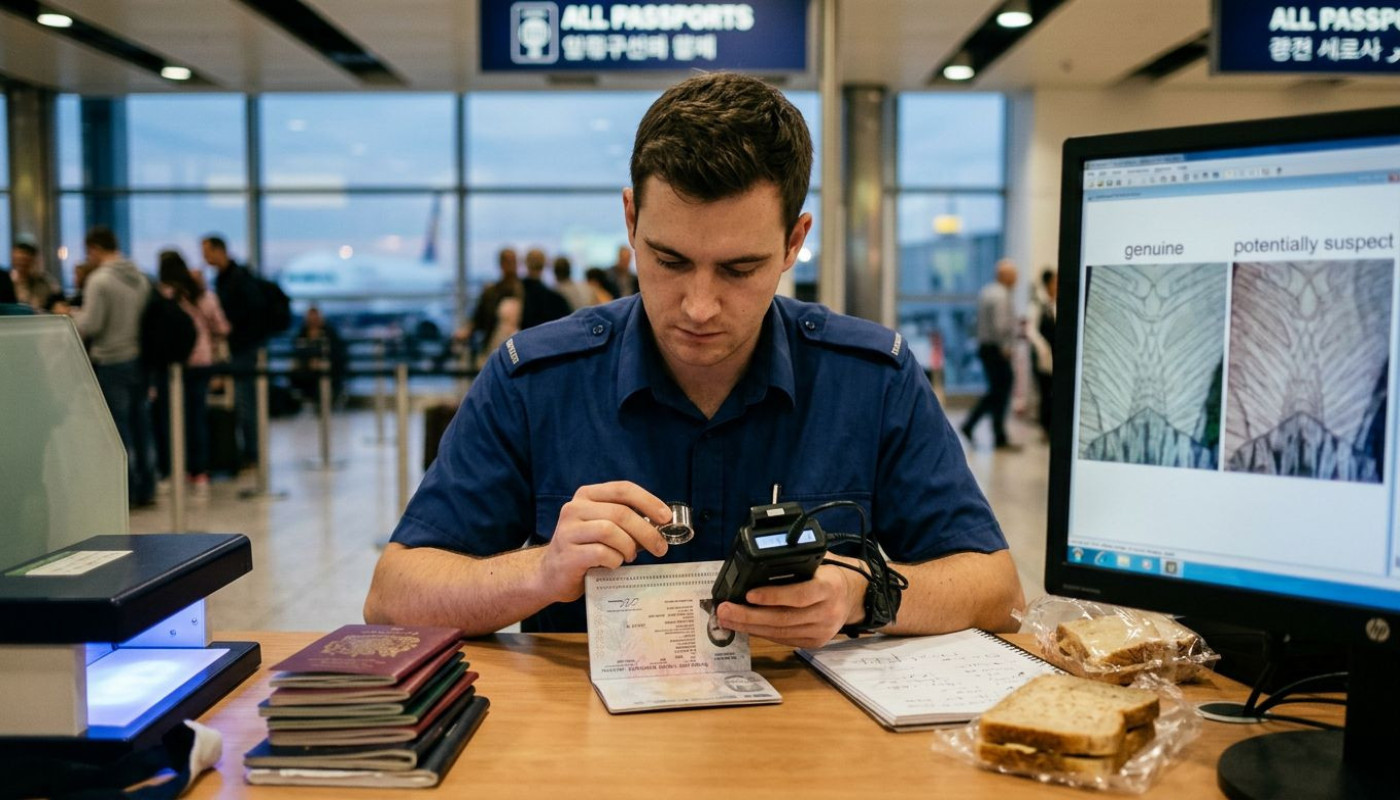
Airports are tightening checks, governments are rolling out digital IDs, and yet passport fraud is climbing in ways that worry border agencies from Europe to the Pacific. The question is no longer whether counterfeiters can print convincing documents, but whether institutions can spot manipulation that happens upstream, in application systems, in photo capture, and in the human workflows that still decide who gets a passport. As cases multiply, the debate sharpens: is this a technology gap, or a people problem hiding in plain sight?
Fraud is moving upstream, fast
It is no longer just about fake paper. The most damaging passport fraud today increasingly targets the issuance process itself, because a legitimately issued document, obtained with false claims, defeats many frontline controls and travels farther before it is detected. In public reporting and policy discussions, two trends stand out: first, the steady professionalisation of document fraud networks, and second, the shift toward “breeder documents” and identity takeovers, where fraudsters start with a birth certificate, a residence permit, or a compromised civil registry record, then build a clean-looking passport trail on top of it.
European institutions have repeatedly warned about this structural vulnerability. Europol has described document fraud as a key enabler of organised crime, and in its serious and organised crime assessments it links forged or fraudulently obtained identity documents to migration facilitation, drug trafficking, and financial crime. Frontex, which monitors the EU’s external borders, reports detections of fraudulent documents each year across air, land, and sea routes, and while the exact mix varies by corridor, the underlying pattern is consistent: criminals adapt to whatever check is strongest at the border by shifting pressure to weaker points earlier in the chain. If biometric gates catch poor-quality forgeries, the response is to obtain better-quality counterfeits, or to corrupt the application pathway until the passport is genuine but the identity is not.
This is also why passport fraud has become a “systems” story. A single weak link can be exploited at scale: inadequate verification of supporting documents, inconsistent interpretation of eligibility rules, insufficient training on photo standards, or backlogs that push staff toward speed over scrutiny. Once fraud makes it into an official database, it can be replicated, renewed, and even used to anchor other credentials. The strategic risk, for governments, is not only individual cases slipping through, but erosion of trust in the document’s reliability, which then triggers tighter visa policies, longer processing times, and more burdens for legitimate travellers.
Biometrics help, but they are not magic
Biometrics are often presented as the technological antidote, and in many ways they have raised the bar. The global standard for ePassports, based on ICAO specifications, relies on a contactless chip that stores biometric identifiers, typically a facial image, and may include fingerprints depending on national policy. Automated border control gates can compare a live capture to the chip data and to the document’s security features, and that alone can defeat a wide range of older counterfeit techniques. But the promise of biometrics depends on the integrity of enrolment, and enrolment is where fraudsters focus their energy.
Consider what happens when the input is poisoned. If an applicant presents a high-quality forged birth certificate, or if a civil registry entry has been altered, the biometric in the passport may match the person holding it perfectly, because the state enrolled the wrong identity, then sealed that mistake inside a secure chip. In other words, biometrics can strongly bind a document to a body, but they cannot automatically prove the person’s story about who they are, and they cannot correct weaknesses in civil registration systems. This is why advanced border controls are not enough on their own, and why more countries are investing in cross-database checks, anomaly detection, and stronger authentication of source documents, including digital verification with issuing authorities where possible.
There is also the arms race around image integrity. Facial recognition systems have improved, but so have presentation attacks, such as carefully engineered photos, lookalike fraud, and the use of edited images to meet standards while subtly changing identity traits. Regulators and standards bodies have issued guidance on photo quality and liveness detection, yet real-world deployment is uneven. A sophisticated system in a major airport may coexist with a manual desk in a small consulate where staff must judge an application under time pressure, and the overall security posture becomes only as strong as the least supported environment.
The human factor remains the biggest lever
Technology failures make headlines, but human error and human vulnerability are often the more decisive variables. Passport systems are staffed by people who must interpret rules, validate documents, and decide when something “doesn’t look right”, and those judgments are shaped by training, workload, organisational culture, and incentives. When backlogs surge, quality control can suffer. When performance is measured by throughput, staff may be implicitly rewarded for moving files quickly rather than pausing to escalate doubts. When procedures are complex, inconsistent practice across offices creates predictable seams for fraudsters to exploit.
Then there is the uncomfortable reality of insider threats. Corruption, coercion, and collusion can bypass even strong technical controls, because an authorised user can approve an application, override a flag, or grant access to templates and blanks. Security agencies have long treated insider risk as a critical vulnerability in identity systems, and not only in low-capacity states. Even in mature administrations, a single compromised employee can cause disproportionate harm if audit trails are weak, if segregation of duties is incomplete, or if investigators lack resources to follow up on anomalies in near real time.
This is why many of the most effective countermeasures sound less glamorous than biometrics, but deliver more impact: rigorous staff vetting, rotation in sensitive roles, four-eyes approval for higher-risk cases, strong logging and monitoring, and clear escalation pathways that protect staff who raise concerns. Add to that targeted training on the latest fraud patterns, and the ability to quickly consult specialists when a document looks suspicious, and the system becomes harder to game. The point is not to replace people with machines, but to design processes that make correct decisions easier, and bad decisions harder to hide.
Pricing, incentives, and grey-zone demand
Here is the part of the debate that rarely gets discussed openly. Passport fraud is not just a cat-and-mouse contest between states and criminals; it also reflects demand from people who feel locked out of mobility, finance, or safety. When legal pathways are slow, opaque, or unaffordable, intermediaries step in, and the line between legitimate assistance and criminal facilitation can blur quickly. Pricing signals matter: the higher the perceived value of a passport, the stronger the incentive to obtain it by deception, and the more attractive the market becomes for organised networks.
That is why transparency is not a cosmetic issue. When consumers, agents, and even journalists cannot easily compare costs, timelines, and official requirements, misinformation thrives, and fraudsters can sell unrealistic promises. In parallel, governments that offer investment-linked routes to residency or citizenship face a distinct risk profile, because the stakes are high, cross-border intermediaries are common, and due diligence must handle complex financial and identity records. The policy conversation around these programmes has intensified in recent years, with the European Commission, for example, criticising “golden passport” schemes and calling for tighter controls, precisely because weak vetting can create security and money-laundering risks that spill across borders.
For readers trying to understand the market signals, tracking official fee schedules and credible cost breakdowns is one small way to reduce information asymmetry. If you are comparing the economics of citizenship pathways over time, resources that compile and explain figures, such as Vanuatu passport price 2026, can help distinguish between legitimate, documented costs and the inflated, opaque pricing that often accompanies high-pressure sales tactics. The broader point is simple: where the rules are clear and verifiable, fraud has less room to operate, and where ambiguity reigns, criminals monetise confusion.
What changes first: code or culture?
So, is the rise in passport fraud a tech challenge or human error? The most honest answer is that it is a design challenge, because technology and human behaviour are braided together inside the issuance chain. A state can buy world-class biometric infrastructure, and still fail if enrolment checks are weak, if staff cannot pause production when something feels off, or if insiders can override controls without rapid detection. Conversely, a well-trained team with strong oversight can catch a surprising amount, but will struggle if systems cannot verify documents digitally, if databases cannot talk to each other, or if outdated tools create blind spots that fraudsters already understand.
The immediate gains usually come from tightening the “middle”: the operational layer where applications are assessed, anomalies are escalated, and audits are enforced. That means risk scoring that focuses attention on higher-risk cases, consistent photo and document standards across all issuing points, regular red-team testing of processes, and real consequences for intermediaries who facilitate deception. Over time, the structural fix is deeper: stronger civil registration, interoperable verification, and identity governance that treats a passport as the end of a chain, not the start. Until then, fraud will keep moving to wherever checks are lightest, and the system will keep paying for its weakest link.
Before you apply, check the basics
Start with official sources, then compare fees, processing steps, and eligibility requirements across channels, and budget for legitimate costs such as government charges, document legalisation, translations, and travel. If an offer promises unrealistic timelines or asks you to hide information, walk away. When in doubt, request written breakdowns, and verify them; the simplest discipline often prevents the most expensive mistakes.
Similar

The Silent Power Of Local Taxes In Shaping Smart Cities

How To Ensure Your Business Meets Global Compliance With An LEI?

Exploring The Ethical Implications Of Advanced Conversational Models

How Obtaining An LEI Boosts Your Business's Global Credibility?

Exploring The Role Of Medical Intuitives In Holistic Health Practices

Choosing The Right DDoS Protection Service For Your Needs

How Free AI Chat Services Are Transforming Online Customer Interactions

Unraveling Quantum Computing: The Unseen Revolution

How Augmented Reality is Revolutionizing Retail

Holographic Tech: Revolutionizing Our Visual World
